Tuesday, 17 April 2012

Death in soccer - another victim

Piermario Morosini was on loan from Udinese (Serie A), when he stepped onto the pitch for his temporary club Livorno, as they faced Pescara in a Serie B (Italian second division) match. He was confident that his team would win.

Little did he know that half an hour later, he would not see the end of the match. Or the season. Or ever.


Morosini collapsed 31 minutes into the game from a cardiac arrest. The medics tried to revive him, and the ambulance got to the stadium late, but every effort to try to get Morosini breathing again, was no use. Morosini was 25, just like his jersey number.

Morosini was another player falling to the most common cause of death for soccer players: cardiac arrest or heart failure. He leaves behind his sister, the last of his family, who is moving in with an Udinese player.

It's very tragic to witness such events. No matter what the circumstances are, you can't deny the fact that there are hundreds, not thousands of people looking to the same spot on the pitch, watching in agony, when a player suddenly collapses, and doesn't get up.

Soccer players put their bodies under high demand every day during practices and matches. It's almost crazy what the human body can do to develop and how much it can do. Chasing the ball for 45 minutes straight is a lot on the player and his body, but they can pull it off no problem. Science at an amazing level.

But let's not forget that not every player is safe from heart failures. It can happen to anyone. Awareness needs to be kept high. We can't completely eliminate cardiac arrests overnight, but we can at least work to prevent them from happening more often.

Rest in Peace, Morosini, and this also goes to everyone else in heaven, who have died playing the (still) beautiful game.

Monday, 9 April 2012

Off-topic - Dionysus in Stony Mountain - A review

 
This past Wednesday night, I went to watch Dionysus in Stony Mountain with my classmates.

First, getting to the theatre was no problem, as it was a short walk from campus. I stayed, because i didn't want to commute all the way back to my place in River Heights just to change. So staying was convenient. The theatre itself, called the Rachel Browne Theatre, located on Bannatyne Avenue, felt like a small, yet simple and classy establishment. Coming to a smaller-than-average theatre, I felt like my huge backpack was a bit of a hazard to the people around me, so I tried to make myself as small as possible.

That's just how I am. I don't expect a lot from the people around me, so I stay humble.

The seating was good, but not fantastic. The comfort was there, the space not so much. Thankfully, no one sat on my left side, so I was able to put my backpack beside me to leave me with some leg room.

The play itself made me find myself in a mix of a history class and a soap opera. But in a good way.

Heidi Prober, played by Sarah Constible, was at her job at the Stony Mountain Institution, talking to her patient James Hiebert, played by Ross McMillan, who refused to take his medication, and has become obsessed with the works of Friedrich Nietzsche. James was in prison for the murder of his wife and is a much different person when he's off the meds. A lot of the first act was focused on James, as he would move around the stage, talking straight from a Nietzsche book, sort of engaging the audience, as if they were his students.

I don't think many plays do that, so this was definitely refreshing to experience this sort of communication, when the audience is indirectly involved, making the audience members actually feel like they're part of the play.

Heidi tries to snap James out of this philosophical dilemma that he is in, but James keeps on going how society has changed regarding its view on criminals, that instead of punishing them with hard labour and putting a strict eye on them, criminals nowadays get special treatment, actually producing more crimes instead of reducing them. Heidi confronts James about his refusal to take his medication, but James keeps asking why she comes to Stony Mountain, and how she feels about her job. Turns out, she hates it, and so she promises James that she'll quit her job after she gets James out of prison by guiding him through his parole hearing. The act ends with Heidi giving James his medication, and the two leave the room together.

The first act left me wondering what would happen next, but I had a hunch that Heidi would actually quit her job.

And she did. The second act started with Heidi's letter to her parents, roughly explaining why she quit her job. There was some humour in there, and it also seemed to have somewhat gone off her rails of sanity to get the audience to laugh. Works for me.

We then move to Heidi's new home, where she's doing insulation work. She gets a surprise visit from her Uncle Eric, played by McMillan as well, who came from sunny Florida to see her. From the rather harsh welcome from Heidi, we get somewhat of a clue for why Heidi has been so hyped up recently. After a lot of back and forth between herself and her uncle, we get to see Heidi come clean. James, her last patient, took his own life in her very basement. She was very shaken by that. Uncle Eric tries to comfort her and ease her mind. The play ends with them working on the insulation, stuffing the padding into the wall between the wooden planks. Light fade to black, audience clapping.

It was a well-deserved applause. Dionysus in Stony Mountain was a great experience, being a small-budget production. The acting kept me paying attention throughout the play, and while Nietzsche's words were hard to understand, James thankfully made it clear in his own words. A lot of the play was targeted towards our minds and encouraged us to think about society and criminals, and how much the world has changed.

Engaging the mind is healthy, just like warming the heart. Except it leaves you thinking critically. Heidi and James did just that, and it's worth experiencing it yourself.

Wednesday, 4 April 2012

UEFA Champions League - Bayern bears hope for Germany

It's been almost 11 years since the biggest prize in European soccer went to the country of beer, chocolate and sausages. But Bayern Munich is set to put these worries aside and is ready to win the UEFA Champions League trophy for a fifth time in the club's history, since 2001. Bayern also happens to be the last German team to win the Champions League.


With a promising roster, with stars like Arjen Robben, Mario Gomez and Franck Ribery, Bayern surely made themselves present, when they dismantled Switzerland's FC Basel by a 7-1 aggregate in the Round of 16. Before that, they finished the group stage in first place in Group A, which included Napoli (Italy), Manchester City (England) and Villarreal (Spain). And just this past Tuesday, they beat Olympique Marseille (France) 2-0 to win the quarterfinal round by a 4-0 aggregate, after they beat Marseille by the same score in southern France.

Bayern has always set their eyes on the bigger prize, probably hence their dominant performances year after year in the Bundesliga. And with superstars from around the world on their roster, they have developed well over the years, and have no intention of stopping. Good for them, I have to say. They're thirsty and show determination to reclaim Europe's throne.

Bayern is going to face Real Madrid in the semis, and that will be one giant soccer festival. It's one of the biggest rivalries in international soccer, and it always lives up to its expectations. Watch out, Ronaldo, Oezil and all the other "Whites". Bayern is ready. So is Germany.

Thursday, 29 March 2012

Off-topic: Journey for Justice - A review


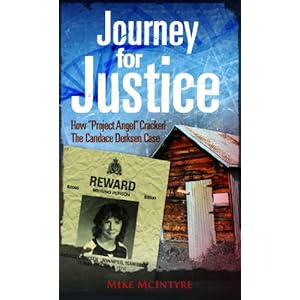
As part of our Journalism class in Creative Communications, the program I'm attending at Red River College, we dug into a book called Journey for Justice: How "Project Angel" Cracked The Candace Derksen Case. It tells a great story about the events of the disappearance and murder of Candace Derksen, and the aftermath, describing the trial of Mark Grant, the murderer of Candace, and the struggles the Derksen family had to overcome, having lost a family member.

It's time to look at the book itself.

Mike McIntyre re-wrote this remarkable story, shifting between two different styles of writing throughout the book, so it seemed. The first part of the book consisted of retelling the Derksens's experience of Candace's disappearance in a novelistic and very attention-grabbing way. I felt like I couldn't put the book down. It was as if I was right there with the family, traveling back in time. It was a feeling that kept me gripped to the book until the end. At least I thought so.

The second part of the book pulled me back into reality and it started to feel more like I was reading a copy of the Free Press, from front to back, just about Candace Derksen. Not that it was bad or anything, but I felt the appeal of the book fading away, once I went deeper into the second part. More quotes were used as dialogue for the story, and made the story just seem more like a long article.

The third part with the Mark Grant trial wasn't really any better, I have to admit. While I could easily picture the events in the courtroom and everything else in between, I still felt somewhat distant from the action, as if I was still reading this newspaper in front of me. It was great of McIntyre to include reactions of the occurrences, especially from Wilma Derksen, Candace's mother, as she wrote about her feelings on her blog. It also was great to include the recruiting efforts for the jury, because I don't think many people know how the law system works, and including that in Journey for Justice is a great way to show what exactly happened in the courtroom.

The last part was a slow, yet good afterburner, involving the events after the conviction, and the memorial and dinner event, held in honour of Candace. Hearing testimonies from the people close to Candace was shaking me a bit on the inside, even if I didn't know any of the people going to the podium that night. Closing the book with some final words from Wilma Derksen was the icing on the cake to me. Final words should always leave a good impression on the book, and I believe Mrs. Derksen's words have done justice for that.

---

Now, a more technical analysis.

I believe the book would have worked better, if McIntyre had kept the story in a novel-like fashion, and tell the whole story that way. But this could be, because he is used to writing newspaper articles and he used these skills to write the book. The second and third part could have worked better if they were written like a novel, like it was in the first part, and I wouldn't have put the book down after starting to read the book. Otherwise, the journalistic writing style did not feel like it was working well with the book, because it just didn't feel like it fitted. The sudden shift in style made the book less appealing.

Journalists can learn quite a few things from this book, including keeping the writing style consistent and how to make the details work in favour of the book. For example, McIntyre kept the course of the events in order of occurrence, going chronologically up, starting with the day Candace disappeared to the still ongoing trials of Mark Grant. Some stories work with going back and forth, using flashbacks and such, but I don't think it would have worked for this book.

I think many journalists would love to speak up against the convicted and trash them in the main media stream, so I also believe many could learn how to keep the story in a neutral position. I believe it was really challenging for the author to write about the family coping with the loss, and not go into a rage against the one who did the wrongful thing. In a professional environment, it is important to stay calm and write neutrally. You won't get in trouble for that.

This book was probably McIntyre's most challenging work. Compared to his work he does for the Free Press, it somewhat felt like the writing he had to do was a bit out of his element. He has a blog called "Mike on Crime" and his writing there is great and enjoyable. But I'm not here to make any judgements on his writing style. I just think that his switch between styles in the book didn't work as they should. Journey for Justice is a book, and in my honest opinion, McIntyre should have stayed with one writing style from beginning to end, to keep it consistent, just like he keeps up in the Free Press and his blog.

Overall, I would have to say the book was definitely a great insight to the Candace Derksen case. It had lots of details included and told the story in as many perspectives as possible,  and it kept the family element at a high importance, which made me find this book touching and outreaching

It's worth a read. Check it out.

Wednesday, 21 March 2012

Fabrice Muamba: The miracle of Bolton

I never thought there would be another major death on the pitch after Antonio Puerta (RIP) of Sevilla FC collapsed during a game in 2008. I was proven wrong this week.


During an FA Cup match between Bolton Wanderers and Tottenham Hotspur on March 17th, Fabrice Mumba collapsed from a cardiac arrest in the 41st minute. The medics immediately came to him and kept pumping his heart, trying to get it to work. He was transported to a nearby hospital and was treated there, until his heart finally started beating on its own. He's still recovering in hospital.

The match was abandoned and rescheduled. 

What a scary moment this was for the world of soccer. It has happened before, but like every other sudden incident, it doesn't come with a warning, and it's uncontrollable. We expect every player to be perfectly healthy and working as they should, and that's what Muamba did, but I guess there were consequences.

In a National Post article from today, the doctors say that Muamba was dead for over an hour, until his heart pumped on its own again. But thankfully the doctors kept pumping his heart and supplying oxygen to him while he was being treated, so that brain death was prevented (Brain death occurs after 4-6 minutes without oxygen supply). It shows how serious medical training is and what miracles it can accomplish.

And I think I can say that Muamba was one of these miracles. Bless him and his family. Hope to see you on the pitch again soon.

Saturday, 10 March 2012

MLS First Kick 2012!

I haven't been this excited for an MLS season before. With a new team joining (Montreal Impact) and many off-season moves made, this 2012 MLS season is going to be one of the best.

This is why I think it will be:

- 3 Canadian teams, old and new rivalries made (Montreal, Toronto and Vancouver)
- New stars coming from overseas (ex. Kris Boyd, former Glasgow Ranger, top scorer in Scottish Premier league for 4 years, now with the Portland Timbers)
- The return of already famous stars (Thierry Henry, Robbie Keane etc.)
- Stadium attendance and media coverage still growing

Today is the day. I'll be watching the Vancouver Whitecaps take on the newest MLS member, the Montreal Impact, in an all-Canadian battle. Should be an awesome game.

Cheers for another good season!


Thursday, 1 March 2012

Live and let play - hijabs in women's soccer


United Nations pressures FIFA to lift hijab ban - National Post

FIFA does not allow female athletes to wear hijabs in respect of their Islamic religion. That just seems like a big pile of rubbish to me. But according to a repost by the National Post (link above) the United Nations is pushing the International Football Federation to overturn this ban, four days before FIFA is reviewing this rule. 

I'm not a person who could easily understand the Islamic ways of life, but I have much respect for any religion out there in the world, and wearing a hijab in football does not harm the other players and fans in any way, in my honest opinion. It defies stereotypes, fights against discrimination and it brings an opportunity to these people to show what that got on the world's stage.

Last year, the Iranian women's national soccer team was penalized with a 3-0 loss to Jordan after the team refused to take off their hijabs before kickoff. The team was undefeated up to that point, and the penalty crushed their dreams of going to the Olympics Games in London this year. Outrageous, right?

Just look at the photo above (courtesy: National Post). Do you see anything wrong with it? What are these women doing wrong in the sport of football? Are they breaking any rules? Please tell me, because I don't see a pixel wrong with it.

These Iranian players just want to compete. So why exactly did FIFA ban this kind of headwear? They say it's for safety reasons. No, just no. They have far bigger safety concerns to worry about, like fan safety at the World Cup. Letting female players wear a piece of cloth on their head should not be a safety concern.

It's time that this sport is moving forward, and not stay in a standstill. FIFA, allow these hard-working women to wear what they want to show respect for their believes, and be able to compete without worrying about what is allowed and what is not. They don't want to hurt anyone, they just want to play.